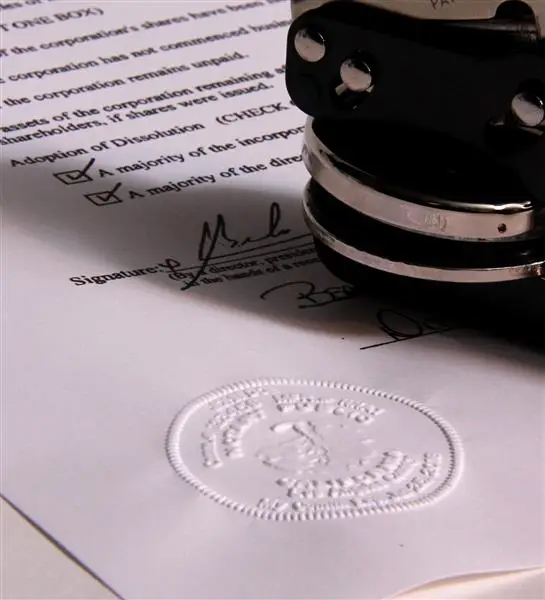
As a notary public, incorrect use of your stamp or seal can cause unwelcome problems. Remember, your stamp is more than just a stamp. It is a statement of trust and confidence. Use of your stamp improperly puts the notary in a position where he or she can be held liable. Furthermore, such use can render the document invalid. Visit the New York Department of State to answer other notary questions you may have. Let’s look at situations where a notary must pay particular attention.
In New York, the Ink Color Should be Black
Other states may have different rules. However, In New York State, Executive Law 135-c says a seal must be black. Other states may have different rules. Any knowledgeable party can reject a document if notarized in a color other than black. In addition, the notary would be in violation of the Executive Law just referenced.
A Document Must Never be Pre-Stamped
In other words, if a document is scheduled to be notarized at a future time, affixing the stamp prior to that time would be in violation of the law. This is because it can open the door to potential fraud.
Blurry Stamp Imprints
First of all, the County Clerk may refuse to record the document if the stamp is not clear. Such a delay can lead to numerous unintended consequences such as, financial losses and legal disputes. Also, blurry stamp impressions can cause questions about the authenticity of the notarization process. But what if the seal impression turns out to be blotchy? We have a blog article that talks about how to fix a blotchy seal. Feel free to read it.
Placing a Notary Stamp Over Text
A notary should never put a stamp over text. It is critical that all text is easily readable and not encumbered by anything that could make it unreadable. As such, a recipient of the document may reject it if they deem any part of it unreadable.
Erroneous Information on the Notary Stamp
If the information on a notary stamp is incorrect, it can make a document invalid. In New York, a notary stamp contains the following information.
The name of the notary
The commission number that assigned by the state
The commission expiration date and other information required by law.
Therefore, if the information printed on the notary stamp is different from the notary’s commission information, this can become a reason to reject the document. So, to avoid this type of issue, make sure that the information on the stamp is correct.
Notary Seal Embossers
At times, a notary may use a special tool called an embosser. This produces a raised impression on the document. As such, it is easy for someone to read any text beneath the seal. However, these impressions are impossible to transfer to a photocopy, which could cause a problem in certain situations. Some notaries may use a stamp and an embosser to avoid the potential problem just mentioned.
Using a Stamp that has Expired
Never, never, never use an expired stamp. At Notary New York, we recommend this Notary Stamp Tip. When ordering a stamp one can leave the expiration date blank. Then, the notary can manually fill in the expiration date. This avoids having to order a new stamp every four years.
Anyway, using an expired notary stamp can put a notary in harm’s way. It can lead to serious legal penalties.
A UPS store may offer Notary Services. However, not every UPS store has a notary on staff when you simply drive to your nearest location to have your document notarized. This can be irritating for customers. Therefore, if you intend to go to a UPS store to have your document notarized, we recommend that you call the location in advance. Making an appointment with the store is the best solution. Some UPS stores require appointments. Most UPS locations are not open in the evenings. In addition, many stores are unlikely to have a Signing Agent, who has different responsibilities from a simple notary public. However, if you require a simple notarization or attestation, a UPS store is certainly an option.
However, as of this writing, FedEx stores do not offer notarizations.
Options for notary services
There are indeed other options are available to have your document notariezed.
Banks
Your local bank branch may have a notary on staff. We recommend that you call first to confirm. Many branches, but not all, have a notary on staff ready to assist you. In addition, if you are a customer, the notary may waive any fees that would apply to the notarial process. Again, call first to save yourself from making a wasted trip.
Mobile Notaries
A quick internet search will help you find a Mobile Notary. In this scenario, the notary will come to you. These services may be more expensive than standard notarization. Mobile notaries can add travel expenses to their fees. Despite the increased expense, you are provided far more flexibility. You do not have to drive anywhere. The notary will come to you. In addition, you do not have to schedule your notarization around store hours.
Remote Notarizations
Many mobile notaries may even provide Remote Notarization, which means the process is done online. Again, the cost may be higher because the cost to the notary is higher, as they have to meet specific costly state requirements to maintain security for the notarization process. But, in some cases, you may have 24/7 access. This offers huge convenience to customers.
Office Depot
Similar to the UPS Store, many Office Depot locations provide notary services. However, many may not; as with the UPS Store, it is recommended that you call your nearest Office Depot store to verify if they have a notary on staff and available.
Conclusion
There are many places where a document can be notarized. Notary service at a UPS store may be a valid option for notarizing your documents. However, as mentioned above, there are other choices. For more information, read our blog article, which highlights more possibilities for getting a document notarized.
For anyone wishing to become a notary in New York, we can prepare you to pass the New York Notary Exam. To learn more, watch the YouTube video.
Although notaries perform both a notarization and an attestation, they are not really the same thing. In New York, only a notary public, commissioned by the state, can perform a notarization. We may be splitting hairs here, but any individual can execute an attestation.
Notarization:
When a notary performs a notarization, he or she is verifying that the signer of a given document is the person they claim to be. The idea assures the minimization of potential fraud. For this reason, it appears unlikely that notary services will ever be replaced by AI. You may wish to read our article about AI replacing notaries.
So, the party must sign the document in the presence of the notary. This person must present ID to the notary, who will compare the signature from the I.D. with that on the produced identification. In addition, the notary must make certain that the signer is not forced to sign a given document. Or better stated, the signer is not under duress. The purpose of this protects anyone considered mentally challenged, like an elderly person, or someone mentally incapacitated, or otherwise in a vulnerable position.
In New York, a notary must record the notarial act in a journal after placing his or her seal on the document.
Attestation:
The term “Attestation” applies when a third party, not involved in a transaction, witnesses the signing of a document. This person is essentially attesting, or bearing witness to the signing process. As such, anyone can complete this task of witnessing. The person who gives an attestation does not have to be a notary public.
Some documents that may need a witness include: Wills, Power of Attorney, Certain Affidavits, etc.
For example, when a foreign spouse of an American citizen applies for permanent residence in the United States—a “green card”—that person must provide statements from witnesses who have seen them both together during the time they spent in the U.S. Applicants for a Green Card frequently turn to people they know to write a statement to verify their observations of the two interacting as a couple. Such people may include religious persons, friends, or people in their neighborhood. So, the signature of one of these sources on any given document is an attestation.
On the other hand, there are documents which require the signature of a legal public notary. Usually, high-dollar transactions, that include transactions of real estate, vehicle titles, etc., require a notary’s signature, called a “notarization.”
Conclusion:
You can now see that an Attestation and Notarization are not different animals. It becomes essential to understand this point whenever you need an important document signed. If you wish to pass the New York Notary Exam, knowledge of these topics becomes necessary. If you are intent on taking the N.Y. Notary exam, we recommend that you read our article titled, New York Notary Exam Tips.
If you only need a witness to sign a document, that’s a simple attestation. Anyone can do it. But if you need to ensure that neither party is defrauding the other, you should get in touch with a notary commissioned by New York State. At Notary New York, we train people to pass the New York Notary Exam. If you would like to know what it costs to become a notary in New York, watch our YouTube video.
Some believe that a signing agent and a notary public are the same. Let’s explore the differences. It’s true that the role of a notary remains important. But it does come with limitations. Notaries are not allowed to verify every type of real estate document. They are certainly needed to verify the signature of a document.
However, their authority ends when it comes to the complexity of deeds or other documents needed for closing. Although a notary remains an important part of the real estate proceeding, they possess a limited scope of authority. Unfortunately, some notaries fail to understand that their commission does not allow participation in certain types of real estate dealings. In short, a signing agent is a notary, but a notary is not a signing agent. You can learn more by visiting the New York Department of State.
Let’s look at this subject more closely.
Signing Agents
A signing agent must undergo a rigorous process in order to obtain their commission. In short, this includes:
Obtaining a notary bond (in states like New York, a regular notary does not need a bond).
Meeting state-specific requisites (every state has its own specific requirements).
They must pass a course in order to get certified.
Acquiring the necessary materials to carry out the role.
Multi-page scanner
Lots of legal paper
Blue pens
Like a Notary, they need a journal, a stamp, etc.
Signing Agent and Notary Comparison
Remember, a signing agent is a notary public. As such, they just have a broader span of responsibility that requires additional certification. As such, they can assist with more activities.
Regular Notarization: Regular notaries can verify signatures on documents like contracts, affidavits, and power of attorney.
Jurats: A jurat substantiates that the signer “swears by” or “affirms” to the information contained in a document. A notary will verify the document stating that the document was sworn or affirmed in his or her presence. Essentially, a jurat takes place under oath.
Deeds: A deed is a legal document that conveys ownership of property from one person or entity to another. Hence, a notary must verify that the documents within the deed processing are completed and that all necessary signatures have been added.
Loan Documents: Notaries help guide buyers through the loan process by ensuring that all signatures are correct.
Real Estate Contracts: A signing agent will review and handle real estate transactions like closing documents. Other documents may include mortgage documents and lease agreements.
Should I Become a Signing Agent or a Regular Notary?
Well, that depends on your job. If you work in real estate, becoming a signing agent can put another tool in your toolbox. Consequently, it makes you a more valuable employee, or at the very least, makes you more attractive to a potential employer. On the other hand, if you work in another type of business or industry, being a regular notary is sufficient. At Notary New York, we train people to pass the New York Notary Exam. However, we do not offer signing agent training. If you need to renew your regular New York notary license, read our blog.
Here are 5 New York notary public exam preparation tips for first-time applicants. Do you want to be a professional notary public? Is this the first time that you are taking the exam? Does this mark your initial attempt at taking the exam? Are you unsure about the correct way to proceed? Notary public status provides an excellent way to enhance your professional resume. The position also provides additional earning potential. The community benefits from this role. The first-time exam taker may find the preparation process to be overwhelming. The correct approach will help you succeed in the exam during your first attempt. What types ofr questions may appear on the New York notary exam? Watch our video.
New to the Notary Public Exam? Start with These 5 Tips
Understand Your State’s Requirements
Every state has its own rules for securing a notary commission. Some states require a written exam. Others may only require a background check or training course. Indeed, the first step in becoming a notary is to visit your state’s official website. In New York, it is the New York Department of State. Here you can review all the requirements. Knowing what to expect will help point you in the right direction. At Notary New York, we train people to be exam ready. Feel free to watch our YouTube video that addresses the steps to become a New York Notary.
Invest in a Reliable Study Guide to help your Notary Public Preparation
Notary public preparation is much easier when you use the right materials. Look for a notary exam study guide or handbook for the state you live in. Altogether, these guided cover topics such as notary laws, identification requirements, recordkeeping, and any prohibited acts. Most come with sample questions. Certainly, these are designed to simulate the actual test. A good study guide can be your best friend as you prepare.
Take a Notary Training Course
Not all states require training. But enrolling in a notary education course is highly recommended. This is especially for first-timers. These courses can be offered online or in person. They are designed to explain intricate notary procedures in a simple way. They usually include real-life scenarios. Consequently, these help you understand how the rules apply in real-life practice. Learn more about our training course on our website. About the Course.
Practice with Mock Exams
One of the most effective preparation tips is to take practice exams. Chiefly, they help you get familiar with the types of questions that you may encounter. Time yourself. Above all, this helps you to simulate real exam conditions. Furthermore, the more you practice, the better you’ll feel on exam day.
Stay Calm and Stay Consistent
Set aside a dedicated study time each day or week. Of course, this will depend on your life schedule. Don’t try to cram. Break the material into sections. Review it regularly. Also, don’t worry if you don’t grasp something right off the bat. We hope you found these New York Notary Exam Tips helpful.
Put Your Best Foot Forward with Committed Preparation!
So, if you are looking for a trusted destination where you can find the resources for a solid notary public exam preparation, look no further. Your search ends at the Notary New York. We offer a course that covers everything from the New York State Notary application and the course manual to the complete Notary license law. Basically, you will also get an insight into the kind of questions asked at the notary public exam. You can contact us directly or leave a comment below. Conversely, if you already are a New York Notary, you may wish to read our blog article titled, 7 Wasy to Increase your Notary Business.
Will AI be a substitute for notaries public? This question has been popping up recently in the notary community. The continued growth of artificial intelligence (AI) has produced debates across many business sectors. This includes industries like medical, legal, education, construction, and finance. One profession that has faced these questions is that of the notary public. Since remote notarization is becoming more prevalent, many wonder whether AI will become a substitute for notaries altogether. It isn’t as simple as it looks. At Notary New York, we train people to pass the New York Notary Exam.
The Role of a Notary
A notary public’s main role is to act as an impartial witness to the signing of documents. They verify the identity of a signer. They ensure that parties are willing and understand the document. The idea is to prevent fraud. These tasks might seem procedural. And to some extent, they are. That’s why the idea of replacing notaries with AI or automated systems has gained traction. This is especially true (as mentioned above) with the growth of remote online notarization (RON). To learn more about Remote Notarization, visit the New York Department of State.
AI and Document Verification
AI can certainly streamline document verification. It can be used for facial recognition and identity checks with remarkable speed and accuracy. There are areas that already exist that use AI to assist in verifying government-issued IDs. They can compare them with a person’s facial image through video. These tools can clearly reduce the potential for human error. In addition, they can operate 24/7. In a digital-first world, AI could, in theory, process notarizations faster and more conveniently than any human ever could.
AI Fully Substituing for a Notary is Unlikely
However, while AI can assist notaries, full replacement is highly unlikely in the near term for several reasons.
First, there’s a legal framework that protects the integrity of the notary’s role. Laws in most states require a licensed human notary to perform or supervise notarizations. This remains true even when notarization is done online. The human element can provide a layer of discretion and judgment that AI, as of now, cannot fully duplicate. This is mainly true when dealing with complex or emotionally charged situations. For example, only a human can determine whether someone is signing a document under duress. Such a situation requires a degree of human insight.
Second, trust is a critical factor. Many people feel more secure when a real person handles legal or official matters. This is particularly so in situations involving real estate transactions, wills, or power of attorney. Comfort with technology continues to grow. But there’s still a long way to go. The desire for human oversight in major decisions still remains high. An example of this would be the use of a credible witness in the notary process.
Third, ethical and technical limits of technology still hinder complete automation. Data privacy concerns and the possibility of AI being exploited raise all kinds of red flags. Regulatory agencies are very cautious about allowing AI to assume legal responsibilities without a clear framework for accountability.
Instead of replacing notaries, AI is more likely to aid in their work. It can reduce administrative burdens. It can automate repetitive checks and help notaries serve clients more efficiently. Rather than eliminating the role, AI will likely shift it. It could eventually move notaries into more supervisory and consultative functions. This seems to make sense, especially in complex transactions.
Conclusion
In conclusion, to answer the question, ” Will AI Be a Substitute for Notaries,” let me say, while AI will continue to affect the way notarial services are done, it is not likely to fully replace notaries anytime soon. The future will likely see a mixed model. This would be where AI supports, rather than supplants. Take, for example, signing agents. They may often be required to be at a specific place at a specific time.
First of all, you can renew your New York notary license 90 days before its expiration date. Your current license shows what that date is. Another key point is that you must submit your renewal application no later than six months after your license has expired. If you wait, you will be forced to take a new exam, and your current license will be null and void. We recommend that you renew your commission early. This will help to avoid any potential snags. The last thing you want is to have your commission lapse. And remember, you’ll need to submit your $60.00 payment with your renewal application. You may wish to read our article concerning a New York Notary Exam update.
Your Oath of Office
You will have to complete your Oath of Office. Since you are renewing electronically, you will have to complete the application and have it notarized. You will then have to scan it and upload it to the state.
As technology continues to advance, mailing your application has fallen by the wayside. In New York, the state is now requiring an online renewal. This became effective June 20th, 2023. They have created what they call “Business Express.” This is a webpage specifically built to facilitate license renewal, as well as to help people start a new business. We suggest you check it out.
So, you will have to search for the term “Notary.’ Once there, you can search your notary account from your dashboard. Your notary commission ID will be emailed to you once the state processes your application.
You can also update your name, address, phone, etc., from your dashboard. It is recommended that you maintain a current email address with the state. Should you decide to change your email, remember to log into your account and change it with the state.
If you are not a New York notary and wish to become one, we can help. We train people to prepare for and pass the New York Notary Exam. Feel free to read our blog article that shows the New York Exam Sites, and what is expected of you at the exam.
People often ask us to explain the difference between Notaries and Signing Agents. With this blog, we hope to enlighten the casual reader. At Notary New York, we train people to pass the New York Notary Exam. We do not train people to become signing agents. You need to know what distinguishes one from the other. Let’s begin by saying that not all signing agents are notaries, but not all notaries are signing agents. If you wish to become a signing agent in New York, we recommend you view the linked video.
Notaries Public:
A notary is a person appointed by his or her state. The primary responsibility is to be an impartial witness to the signing of documents. They do this by validating the client’s identity and confirming that the client is not signing under undue influence or duress. In addition, they may take an oath or deposition.
Because of this responsibility, a notary has to meet certain qualifications provided by the state in which they reside or do business. They cannot give legal advice or act in their own self-interest. Most notaries perform their acts in person. But technology continues to advance. As such, more notary certifications will be done remotely.
Signing Agents:
Remember, signing agents are also notaries. But not all notaries are signing agents. The difference is that a signing agent needs to have additional training and a broader knowledge base than a traditional notary. This is because they must be trained to handle important load documents, like mortgages. Many real estate professionals expand their notary certification to become a certified signing agent. That’s because the transactions done are often complicated.
They usually appear in the final stages of a financial transaction for the purpose of facilitating document handling. Just as a notary helps to prevent potential fraud, the same is true for a signing agent.
A signing agent usually goes through a more thorough background check than a notary. Some states require a background check annually.
Conclusion:
In either case, both professions provide a leg-up on any competition seeking the same employment post. In addition, it lets a potential employer know that you are a professional who possesses integrity. This integrity must be maintained even if your boss requests that you notarize an illegal document.
Here is a New York Notary Exam update. We have been informed by several students that the New York Notary Exam has been adding questions to test your knowledge about Remote Notarization. As many as 5 questions have recently appeared on tests across New York State.
Our course has three practice exams. However, nobody knows exactly what questions will appear on any given test. What we do know is what the state is looking for. That is for the test-taker to be confident and qualified to fulfill their notarial duties. Since our students have a 97% success rate at passing the exam, we believe we are on the right track. This article is to keep potential notaries up-to-date so they can properly prepare for exam day. We recommend that all of our students pay close attention to our course chapters on Remote Notarization. In addition, it is a good idea to do the same with our instructional videos. This is true whether you are applying for a remote notary commission or a standard notary commission.
We have several blog articles that talk about RON (remote notarization). Please click on the links contained in this blog item to read them. You can also scroll through our articles to locate them.
Facts about the NY Notary Exam
The exam has 40 questions. You are allowed one hour to complete the exam, and you must have a score of 70% or better to pass. That means you will have to answer 28 questions correctly. So, if your test has five questions about RON, that means that means that 12% of the exam is related to e-notarization. Thus, it is well worth your while to fully understand the various requirements needed to be met when doing a notarization remotely. If you answer all 5 correctly, you will only need to get another 23 right to receive your commission. So, it is important that you understand how to perform remote notarizations.
Will all tests have 5 questions?
The state does not issue the exact same test across the board. Maybe your test will only have two or three questions about remote, or three. There is no way to know. What we do know is that the better you prepare, the more likely it is for you to pass. We also know it is highly likely that there will be something about RON on the test. There is another blog article where we addressed frequently asked questions about remote notarizations.
In Conclusion
New York Notary Exam Update is worthwhile. And, remember to give yourself enough time to study prior to taking the exam. The better you prepare, the better your chances are of passing the exam. Don’t cram. It’s far better to study in short segments until you feel that you have a firm grasp of the subject matter. If you take notes, it’s better to read them out loud. This helps to reinforce what you already learned. On test day, get a good night’s sleep and eat a full breakfast. You can also learn more about RON by visiting the New York Department of State website.
If you’re a notary public looking to grow your business you’re in an industry that’s competitive. These are 7 tips on how to grow your notary business, and create a loyal customer base. If you would like to become a notary in New York, we can get you ready to pass the exam. These are seven tried and tested ways to help you grow your notary business.
Leverage Digital Marketing and Online Presence
In today’s age of technology, having a strong presence online is crucial. Many prospective clients first turn to the internet when needing notary work. To capitalize on this, build a professional website highlighting your services, address, and contact information. A site with clear calls-to-action an easy-to-use design can drive visitors into clients.
Along with having a website, you need to spend some time doing search engine optimization (SEO) so that your company comes up during local searches when people type “notary near me” or “mobile notary service.” Posting regularly on social media platforms like Facebook, Instagram, or LinkedIn can also help you establish your brand and get more noticed. Sharing tips on notarization, promotion deals, or even behind-the-scenes of your operation can capture the attention of potential clients. To begin, you may want to find out about the most common documents to be notarized.
Expand Your Service Offerings
One of the best ways that you can enhance your notary business is by offering more services. While notary services form the core of your company, consider offering other services like:
Mobile Notary Services: Many customers desire the ease of having a notary come to their home, office, or other business.
Loan Signing Services: Providing loan document signing services to mortgage companies, title companies, or real estate brokers can be profitable.
Certified Notary Services: Provide Apostille, document authentication, and witnessing legal documents services to serve international clients or companies.
Business Document Notarization: Support local businesses in their notarization of agreements, contracts, and other legal documents.
By diversifying the kind of service you offer, you will be able to reach a wider client base and, therefore, increase your top-line revenue.
You Can Network with Local Professionals
Networking is the secret to building long-term relationships that provide a steady stream of business. Real estate agents, mortgage brokers, attorneys, accountants, and title companies all frequently need notarization services. Establish a relationship with these professionals and offer to help with their notarization needs. Attend local business functions or networking meetings to get your name in the field and meet other business owners. If you offer good and professional service, you will become the go-to notary for many of the local businesses in no time.
Build Strong Client Relationships
Word-of-mouth is prevalent in the notary business. Building and keeping good relationships with your clients can lead to repeat business and word of mouth. Always provide your customers with great service, arrive on time, and complete the job accurately and professionally. Going the extra mile, such as arriving early or providing mobile services, can leave a lasting impression and create loyal customers.
Pricing
While you don’t want to shortchange yourself, being competitive might attract clients who are looking for a cheap solution. But in New York, what you can charge is state-determined. But if you are a mobile notary, you can charge a travel fee based on the distance, but just ensure it is low enough that your clients will still find your services worth paying for.
Utilize Notary Directories and Apps
Most online directories enable notaries to advertise their services in the directories, thereby making it easier for prospective customers to locate them. Sites such as NotaryRotary, 123Notary, or Snapdocs are common directories to advertise your business. Such directories usually attract users who are searching for a notary in their region.
Also, try using notary apps and software that make it easier to get hired. These apps bring clients to you, and some allow you to receive jobs directly through your phone. By being on these websites, you can get more exposure and create more business leads.
Offer Flexible Hours and Accessibility
Notary services might be needed after regular business hours, usually by clients who need it urgently. Having flexible scheduling, i.e., evenings or weekends, can help attract clients who need notarization but cannot take time off work during regular business hours.
Also, if you can provide mobile services, you will be able to serve clients who require you to visit them. This extra convenience will make your business more appealing to people who have hectic schedules or have difficulty visiting a notary in person.
Conclusion
Expanding your notary business involves some combination of smart marketing, savvy networking, and customer satisfaction. By expanding your services, building relationships, and maintaining a presence online, you can differentiate yourself from other notaries and have a steady stream of clients walking through your door. With the right strategies in place, these 7 ways to expand your notary business can help you thrive and grow in the long term.
There are moments that could arise where your signer has the power of attorney. As such, you are notarizing the document for the representative of a specific person. There are certain circumstances in which a person may have power of attorney. Power of attorney gives a person control over specific aspects of their life. Such a person is also called “the attorney in fact.”
Situations where power of attorney may exist
Maybe a parent is getting older and is no longer able to deal with their finances.
Someone may be in the armed forces and is deployed overseas, thus unable to handle their domestic affairs.
Someone may have a type of job that could entail the potential for serious injury, and they appoint a representative to handle their affairs should they become incapacitated.
A misconception is that the person is the power of attorney. This is not true. They are an agent who has the power of attorney. This seems like a small difference, but we need to make the point clear. Another point to make is that the power of attorney ceases should the person represented become deceased So, the person who has power of attorney has the authority to sign on behalf of the principal without that person present. The term principal refers to the person being represented.
What’s Important
If asked to notarize a power of attorney document, it is important to know the rules that apply in your specific state. Some states require you to obtain a thumbprint of the signer. Okay, so someone comes to you to notarize a document for a principal. They should sign it with not only the principal’s name, but their own name. So, that person may sign with the principal’s name first, then their own name, followed by the words, “Attorney in Fact.”
In notarizing where only an attorney in fact is present, you will only need to confirm the identity of the person present. Obviously, you cannot verify the identity of the person represented, who is not there. A key point here is that when the signer has power of attorney, they need to present the document to the notary. A photocopy is not acceptable, unless it is a certified copy.
Again, different states have different rules governing the power of attorney. So, know your own state’s rules thoroughly. Regarding New York, you can find an excellent article at evident.com.
You may ask, Can I notarize a document if the client is not present. The answer is YES and NO. It depends on the State in which you are commissioned. Where the answer is YES, there is a huge “BUT.” The client must sign the document in front of a Subscribing Witness. This person then signs a document that states that they have witnessed the signing of the absent person. The notary would issue an oath to the subscribing witness, where they swear that they watched the client sign the document. One example might be when the signer has Power of Attorney.
Also, there could be a time when your boss may ask you to notarize a document when the client is not present. What would you do? We have a blog article on this subject. It is title is, “Can a Notary Refuse Service?.”
Rules for Accepting a Subscribing Witness
Again, the subscribing witness must swear they saw the client sign the instrument.
The subscribing witness then signs a form called a Proof of Execution.
The notary then completes the notarization with the wording required by his or her State.
You need to exercise extreme caution when you are asked to fulfill a Proof of Execution. Since you cannot absolutely identify the signer, the potential for fraud can increase dramatically. This is why some states do not even allow Proofs of Execution. Many other states have serious restrictions on Proofs of Execution. So, it is most important that you know your State’s law regarding the use of a subscribing witness. If you live in New York, you can accept a subscribing witness. If you would like to download the certificate, you can do so at ny.gov.
To your good fortune, it would be extremely rare for a notary client to be absent. Many notaries we know have never had to accept a request for a Proof of Execution. But should you receive such a request and you are not totally familiar with your State law governing this notarial service, don’t be afraid to decline service. But remember, we must act in a professional manner. Too many things need to be addressed, and the client needs to be in your presence. For example, what if there is a name irregularity?
Please feel free to read our other notary articles. You will find a lot of valuable information that will aid you in your pursuit of your notary public career.
There is something you should know if you wish to become a notary public in New York. Notaries public are subject to notary discipline. Yes, all notaries know this. But, anyone who wishes to become a notary public needs to understand the sanctions imposed for misconduct. So, in New York, notary misconduct can be a misdemeanor or a felony, depending on the nature of the transgression.
Case Study
One of the more serious sanctions a notary can face is the revocation or suspension of his or her commission. If a notary commits fraud, the consequences are even more serious. The case of New York v Nathan Frankel alleged that the notary notarized a forged deed. You can read the entire transcript by clicking on the link in the previous sentence. Anyway, the court determined that the complaint did not establish enough evidence to support the claim that Mr. Frankel knowingly notarized a false deed. So, the case was dismissed. But, had the court found for the complainant, the defendant would have been convicted of a felony.
Notary Misconduct
The discipline for notary misconduct varies according to the offense. Let’s look at just a few.
Failure to administer an Oath. This could result in revocation of the notary’s commission
Falsely acting as a Notary Public. This would be a misdemeanor in New York
Making False Statements. This can be fraud, which is a felony
Any misrepresentation on a notary application. This would result in revocation.
Issuing a false certificate. This would be a misdemeanor. But, issuing a false acknowledgement would be considered forgery.
The above are just a few examples where notary discipline can come into play. The smart notary knows the laws of his or her state. They then conduct themselves in a manner to avoid any hint of violating the law. To learn more about notary responsibilities, I recommend you visit Michael Closen’s you tube video.
This article is directed to anyone who desires to become a notary public. As stated, most commissioned notaries are well-aware of the laws that govern them. To read more of our notarial blogs, visit our blog page.
If you wonder what to record in a notary journal, allow me to put you at ease.
Most commercial journals contain the necessary categories already printed for you.
This facilitates your need to remember every critical item to record. However, it is important that whatever journal you purchase has specific information. Let’s review them.
Information to Record in a Notary Journal
The time and date of the notarization
The method of identification that the constituent presents to you
The specific location where the notarization took place
The type of document that you are notarizing
The constituent’s name
The constituent’s contact information
The Signer’s willingness and competence
The signer’s signature in your journal
The notary fee that you charge for the notarization
Any added information that you think could be important
Should circumstances be such that you need to refuse notarization this should also be recorded in your journal. Firstly, a notary should never refuse service. But there are many reasons one may refuse service to a document.
Reasons to Refuse Notarization
Perhaps the signer appears intoxicated
The signer may be drug-induced due to illness or lifestyle
Further, maybe the signer shows signs of cognitive impaired. This client must understand what it is they are signing
So, if the notary believes the constituent is under duress or influenced by someone who could benefit from the notarization
In such circumstances, the notary needs to record the refusal in his or her journal. This record should be as accurate as possible. Remember, your journal could be accessed in the future because it is a public record. Also, the accuracy of your journal entry could come into play should there be a future investigation or litigation.
These days, you can use an “e-journal”. Companies like Jurat provide such a service.
I’m sure that most notaries know that they need to identify the mental competence of a client before notarizing the document.
We do this by observing the signer. Engaging in conversation will usually help us to affirm that the individual is competent to complete the notarial process. Let’s remember, we are not a psychologist. It is not our job to assert a professional opinion. However, giving today’s world, with its hunger for litigation, we need to take adequate precautions to protect ourselves. Therefore, we need to determine that the signer has an understanding as to why they appeared in front of us, and that they want a document executed.
Simply put, we not only have a legal responsibility, but also an ethical one, to prevent potential fraud. We need to make sure they person before us is not a minor, and that they are not signing the document under duress.
As I’ve stated above, we are not psychologists. Furthermore, we are only spending a few minutes with the individual. But, we need to exercise reasonable care to identify the mental competence of the signer.
Factors that could affect mental Competence
There are many factors that could affect a person’s mental competence. For Example:
Alcohol – Although unlikely, but not impossible, the signer could appear before you in an intoxicated state.
Drugs – Even prescription and over-the-counter drugs can affect mental competence. It’s not just illegal drugs that we need to be concerned with.
The Elderly – We certainly cannot deprive someone of their right to obtain a notarization. But, as we all know, as people age their ability to process and understand information becomes diminished. So, if an elderly person appears before us, we need to assess their understanding of why they are there.
So, we need to remember to identify the mental competence of the signer before notarizing any document.
Our blog discusses several topics to aid the notary in his or her professional career. If you wish to become a notary in New York, you can visit the Department of State Website.
We offer online notary training to help you pass the notary exam and become a notary public in New York. Visit our home page to find out more.
In New York, and for that matter, every other state, the personal appearance of the signer before a notary is required. Notaries must understand and implement this requirement without exception. Failure to require a personal appearance not only devalues the office but it is in direct violation of the law. Think about it, how else can a notary confirm that the signer is who he or she claims to be? What’s also important is that a notary must avoid exposure to liability.
Why is a personal appearance before a notary so important?
Only when the client is present can the notary:
Assess whether or not the client is signing of his or her own free will.
There is no other way that a notary can witness the act of signing the document.
There is no other way that the notary can satisfactorily positively identify the signer.
In addition, the notary cannot ask the signer to sign his or her journal if the signer is not present to do so. It is prudent for the notary to keep a journal that records the notarial service. When the client signs the notary’s journal, any question related to the signer’s presence can be eliminated.
Covid presented some new definitions to the term, “personal presence.” Several states have allowed remote notarizations. In New York State, remote notarization became permitted. That is, if said notarization falls in line with the State’s rules.
Methods for remotely identifying a signer in New York
The notary has personal knowledge of the signer
by means of communication technology that facilitates remote presentation by the signor of an official, acceptable form of ID, credential analysis, and identity proofing; or
Through oath or affirmation of a credible witness who personally knows the signor, and who is either personally known to the notary or identified by the previously referenced means of communication technology.
Retail software can be purchased by notaries public to perform identify proofing and credential analysis.
Or visit our website to read our other articles related to becoming a notary in New York. Or, check out our notary answers to frequently asked questions.
A Notary Official seal is one of two things. It is either an inked imprint or an embossed crinkle on a document. So, when a notary authenticates a document, his or her seal and signature make the document official.
Today, ink stamps pretty much replaced embossers. However, an embosser adds an element of status (at least visually) to a document or instrument. So, when you hear the term seal, it can be either a stamp or an embossed impression. Hence, the expression “seal” is often interchangeable with the word “stamp.”
Notaries must be aware that when affixing the seal it should be clear and legible. Should the seal be blurred then the notary should strike through the defective impression and affix a new one adjacent to the faulty seal. Feel free to read our article on how to Fix a Blotchy Notary Seal.
Information required on a Notary Official Seal
Every state has its own set of requirements for what information the notarial seal must contain. But generally, the following information should be contained on the seal.
Notary Public’s name
The State where the notary is commissioned
The date the notary’s commission expires
A notary official seal should never be loaned to another person. It must be securely guarded as the important device that it is. Therefore, keep it in a secure place.
If you need to discard a seal, don’t simply be put into the trash can. Remember, if fallen into the wrong hands it could be used to create fraud. Therefore, you should remove the rubber from the tamp housing. Then cut-up the rubber so that it cannot be used again.
If you have other questions, feel free to visit our FAQ page. From the homepage, just click on the Blog tab to see our other article topics. We hope that you find this article instructive. You can purchase a notary stamp, and other notarial supplies online. Notary Public Stamps is certainly a credible source.
One of the more common notarial acts is witnessing a signature. This is the most direct form of a the notarial process. A key point here is that the document should not be signed in advance. Accordingly, it should be signed in the presence of the notary public. This is a requirement in all States. Sadly, one of the most frequent violations made by notaries is the failure to require a signer to be present at the signing. We need to understand that as a notary public, we must meet certain requirements. This is a mistake. Actually, we advise that you read our article on Common Notary Mistakes.
Requirements for Witnessing a Signature
As we mentioned, the signer must appear before the notary at the time of the notarization.
We recommend that the signer signs the document in front of the notary.
The signer must show an ID to verify that they are who they claim to be.
The notary should be certain that the signer is not under any duress, and they are executing their signature voluntarily.
If the notary has a belief that the document is fraudulent, they should not complete the notarization. Or, if the document has blank spaces, the notary again should not complete the notarial service.
Chiefly, witnessing a signature is a rather straightforward notarial act. As long as the notary understands the law for his or her state, the notarial process is pretty clear-cut.What if the client cannot sign his or her name? FRead our article about signing by mark before a notary.
If you wish to become a Notary Public, at least in New York State, topics like this are what you will need to understand and implement. If you are already a notary and wish to renew your license, contact your county clerk. Or, visit the New York Department of State website.
It is very important to follow the requirements list above, without fail. The last thing you want to encounter is getting yourself in trouble for failing to follow the rules put forth by New York State.
We have written several articles like this to inform the student, and help them on their road to becoming a commissioned notary. Our notary training course is specifically targeted to teach the New York Notary License Law. You can take our online notary training course by visiting our New York Notary website homepage.
The question is periodically asked, should a Notary Public Advertise? As a notary you have every right to advertise your services. However, given the fees the State allows you to charge in New York State, advertising your services would be a loser. It all depends on whether being a notary is all you do, or if it an accessorial service that you provide with your existing business.
Usually, when one sees an ad for notarial service, that service is an adjunct to some other business. For example: Perhaps you own an insurance agency. You may advertise that you provide notary service in an effort to increase the potential for new insurance business.
It is important to remember that you are a public official. Therefore, any type of advertising should be done in a professional manner. The expression “professional manner” denotes different things to different individuals. If you placed your add on a coffee cup, is that a professional manner? It certainly can be. One the other hand, it may not be if the add is cartoonish, or lacks the dignity your commission demands.
Also, if you are a notary because your employer requested it, and it is part of your job. You probably would not have a need to advertise your notary services. Be aware, as an employee, you still have certain standards to meet. You can read our article about the notary as an employee to learn more.
Never Advertise in Another Language
We’ve seen ads for notaries in various local directories, as well as online directories. If you decide to advertise, it is important to know the advertising laws for your specific state. A simple example would be that you cannot translate the title, “Notary Public” into another language. This is not only true in New York State, but most states.
Translated into Spanish, Notary Public becomes Notario Publico. In Mexico a Notario Public is a lawyer. So, if you attempted to reach the Latin community in your area, it would be false advertising. So again, know the laws that govern how you can advertise. It could keep you from losing your commission. After that, decide on the benefit you hope to achieve before spending your advertising dollar. If you feel it worthwhile – the question, “should a notary public advertise”, is answered.
So, in short, it usually isn’t profitable for a notary to advertise, unless it is part of another business. But, if you do advertise, know the law and make sure your ad is dignified.
If you want to learn how to become a notary public in New York, and passing the notary exam, we can help. Check out our home page. You can also visit New York State’s website. Additionally, the National Notary Association has some tips on advertising.
Back in the old days, fewer people were as literate as today. Signing by mark before a notary public was not uncommon when our nation was in its infancy. Although times have changed, and most people can read and write, notaries need to understand how to deal with someone who needs to sign by mark. Generally, this means signing with an “X”.
Illiteracy may not be the only reason someone needs to sign my mark. Perhaps the person has a disability, or some physical challenge that makes it impossible to affix a signature to document.
Regardless of the circumstances, anyone who wants to sign by mark should be allowed to do so. However, we recommend that the notary has two unbiased witnesses appear during the notarial certification process. This is to protect the notary. Furthermore, it is a good idea to record the events in your journal. To protect yourself, you may wish to secure Errors and Omissions Insurance.
Be Careful
In today’s litigious society, it is more important than ever to cover one’s bases. Plus, we need to be careful of potential fraud. As such, the notary needs to take special care to assure that the notarial process be completed with due diligence. It is imperative that we exercise our duty as a public official without discrimination. That being said, we must exercise our obligations with respect to anyone who signs by mark before a notary. At the same time, we need to remain in compliance with our charged duty.
Different states may have varying laws regarding Signing by Mark. Be aware of you state’s laws in this area. This will help assure that you are fully compliant.
We offer several blog articles for notaries and those wishing to become a notary. Our online notary test preparation course is specific to New York State. To learn more about being a notary in New York, you can visit the New York Department of State website.
If you would like to read more articles, visit our blog page.
An apostille most often authenticates the origin of a public document. Hence the term Apostille Service. The Apostille is attached to a notarized document and cannot be removed. This includes items such as birth certificates and court orders. In other words, when a document needs to be recognized by a foreign country. In an ever expanding global marketplace, the need for Apostille grows and will continue to grow.
For instance, there are currently 117 countries who participate in the Apostille Convention. In 1961 The Hague Convention abolished the requirement of legalization of Foreign Documents. So, this simplified the certifying of public documents. In addition, The United States became part of the Hague Convention.
A notary cannot certify any of the documents listed above. This is because a notary in New York State cannot certify a copy of an original document. Hence, since the documents mentioned are copies of an original they are outside the realm of a notary’s charge. Thus, Apostille Service is necessary. For more information on a notary, or becoming a notary, visit our About the Course page.
These are just a few examples. Similarly, there are an endless number of situations that demand an Apostille. Above all, the document needs to be recognized by a foreign country.
For instance, a standard Apostille contains a seal and ten mandatory references, which are:
The name of the country where the document originates
The name of the signer
In what capacity the signer is acting
In an unsigned document, the name of the authority that affixed the seal
The place and date of the certification
The authority issuing the certificate
The certificate number
The seal of the authority issuing the certificate and their signature
Such a topic could appear on the New York Notary Exam. To see some exam sample questions, go ahead and read our bog article on it.
As a notary public we need to be aware that the notary document is being signed willingly. As such, we need to take appropriate steps to assess the signer. We can do this through basic observation, simple conversation, and by asking elementary questions. But, common sense tells us that any signer must voluntarily sign his or her name.
This is particularly true in today’s litigious society. We need to protect ourselves against potential for being accused of misconduct. Remember, always be careful when notarizing for a family member.
Examples where we need to be alert
The elderly: It is not uncommon that the elderly are susceptible to being taken advantage of. We must be certain they are no coerced into signing a document they don’t understand.
The evidence of Cognitive Impairment: If it appears that the signer does not process information, we should be certain that he or she understands why they are affixing their signature to the document.
The notary needs to ascertain that the client is not being coerced into signing the document. In other words, he or she is acting voluntarily and is not under duress.
A signer who is intoxicated by alcohol or drugs is obviously more likely to be taken advantage of. Even if they are not being taken advantage of, the ability to understand what they are doing is severely impaired.
We mention these points because as notaries it is easy to go on “automatic pilot” when continually notarizing documents. It’s important to remember the duty we are charged with as a public official. It is essential that a notary document must be signed willingly. Furthermore, you should enter the service in your notary log. New York now requires notaries to keep a Journal.
Each month we publish a different blog article in effort to provide continuing education to notaries. Someone wishing to become a notary public in New York can prepare for the exam through our website. Don’t forget to visit our About the Course page to see what you need to know to become a notary public in NY.
While there, feel free to visit our blog page to read other articles specifically addressing the challenges that can potentially affect a notary public. You can also visit the New York Department of State to learn more.
Should you provide notarization for a family member? This question pops up frequently. Is it acceptable to notarize a document for someone in your family? I mean, doesn’t this make things simple for both the signer and the notary public? It does. But, and this is a big BUT – things could get complicated later on. Therefore, I advise that you avoid it. Please read our article on Common Notary Mistakes.
Our advice is that you DO NOT notarize for a family member. There are countless situations that can develop in the future. To learn more about avoid this and other potential problems, We recommend watching Michael Closen’s YouTube video.
We have to first take into account that a notary public can in no way benefit from a document that they have performed service to. Servicing the document of a family member exposes us to a “conflict of interest.” It may seem innocent at the moment. But even the slightest hint of a conflict can place you in the crosshairs down the road. It just isn’t worth it. The easiest solution is to recommend the family member see another notary. Just because you don’t see a possible problem does not mean it doesn’t exist.
An Example
Let’s create an example. Your brother asks you to provide service on some real estate property that he purchased. This seems innocent, doesn’t it? Now, let’s go forward three years. Sadly, your brother passes away unexpectedly. Suddenly, you may have either a direct, or indirect, financial interest in that real property. So, you provided notarial service on a document where you have possible benefit. It’s not a big step to see where you innocently violated ethical practices.
Notary law varies from one state to another. There are states that may allow notarization for a family member, at least to a certain degree. Usually immediate family members like: parents, children and siblings would be in violation in any state. Now, if it’s a niece or a third cousin, things become more ill-defined. The solution is to always ask yourself if assisting a relative provides the best result for all concerned parties. If you have any doubt, you may want to recommend your family member use a notary that is a stranger.
We must always consider the consequential aspects of our actions. This is true when a notarial act seems innocent on the surface.
Our aim to remind notaries to take their obligation seriously. It can be easy for any of us to become complacent. So, it doesn’t hurt to remind ourselves that we need to remain on guard.
We offer complete notary public training. Our focus is on helping you to pass the notary public exam and become a notary public in New York. Visit our About the Course page to find out more.
At times, people ask where to have a document notarized. First off, there are numerous types of documents that need notarization.
Why get an instrument notarized in the first place? Well, the reason is simple. By notarizing a document, it becomes official. It makes the document official. That’s to say, it makes it a legal document. Things like contracts, loans property deeds and a mortgage for either a home or a business, need notary service. You are welcome to read our post on the most common notarized documents.
Fortunately for most people, it’s not very challenging to find a notary public. Almost every branch of a banking institution has a notary available. They can assist you to have your document notarized. And, if you are already a customer, the chances are that they will not charge a fee to do so.
In addition, most tax preparation centers can help you. In New York, town clerks’ offices county offices, can assist you. Again, this is free of any expense. You can check for UPS or FedEx near you. If you go to a UPS store, we recommend you read our blog article about notary services and the UPS store. It will give you some insight.
Notarization in New York
In New York, the county office will notarize your document at no cost. The town clerk of your town may in all likelihood be a notary. Many FedEx locations have a notary public on staff. However, they may charge you. Don’t panic though. In New York, the cost of authenticating your signature is only $2.00.
Any law office will be happy to help you. And again, they can only charge $2.00. So, don’t think that because it’s a law firm, they are going to charge you an outrageous sum. Why is the fee only $2.00? Well, New York law stipulates what one can charge for notarial service. That means, whether it’s a bank, a UPS facility, a tax office, or whatever – verifying your signature is still $2.00. So, as you can see, there are many places to have a document notarized.
I want to make a point here. There is something called a Mobile Notary. These people travel to you, instead of you going to them. Even though they can only charge $2.00 for their service, they can add expenses incurred for traveling to you.
So, it should be apparent to you that getting a document notarized is not at all difficult.
Hopefully this article will make it simpler should the time ever arrive when you need to have a notarial service. It isn’t hard to find a notary near you.
We have numerous other articles here on this site. Our purpose is to not only enlighten the public, but to inform those who desire to become a New York Notary Public. If that is your goal, it matches our goal. That is – train you to pass the New York State Notary exam. If you are interested in becoming a notary in New York, visit our About the Course page to learn more.
It is not at all rare when a notary faces a name irregularity. You could experience a situation where the name on the document is different from the name of the client. That is, the person who is signing it. You may be asking, how can this happen? Well, consider a recently married female. She has yet to change her various IDs to show her newly adopted name.
That’s one example. Another could be that the I.D. reflects the name as “Ray Doe,” but the document refers to the individual as “Raymond Doe.”
Another situation could be that the person’s I.D. could show a Middle Name. The middle name might not reference the person’s middle name. Or, the name is misspelled on the proposed instrument.
Let’s examine a more complicated situation. Let’s say that the document references the signer as Sr., but upon examining the I.D. you see that it shows the signer as Jr. Care needs to be taken here. It is conceivable that a son may be trying to use his dad’s name for a false purpose. Or, it could be nothing other than a simple typo. But, be cautious.
Your Challenge
When a notary faces a name irregularity, it needs to be handled. Each incident compels you to base your decision in accord with the facts that are available to you. The best course is to break things down to their fundamentals. It starts with remembering what our job charges us to do. That is, to sensibly and reasonably distinguish that the person is exactly who they claim to be. So, by breaking things down to their fundamentals, we mean that you use sound judgement.
The situations just outlined are only a couple examples to be alert for.
I’ll say it again. It is your responsibility as the notary to be satisfied the person is who they state they are. It’s conceivable that a name was misspelled on the instrument. Anytime you encounter a discrepancy, you need to let common sense prevail. Does the photo image align with the actual person sitting in front of you? If you are comfortable, then continue with the notarial service.
But, what if the client is behaving in an abnormal manner? Or, what if you have a level of doubt related to the identification? You have every right to request another form of identification. If you still have misgivings, you can clearly refuse to finalize the instrument. This is why it is important to have the client make a personal appearance before you.
But if you decide to continue, it’s best to complete the certification, using the name that is shown on the document, as opposed to using the name as it appears on the individual’s I.D. You certainly want to enter the specifics of this experience in your notary journal. That way, if a problem occurs in the future, you will have documented the certification.
Recommendations
There is a wonderful book that you should have at your desk. It is, “Notary Best Practices” by Professor Michael Closen. I recommend that every notary have it on hand.
Our mission is to teach people how to become a notary public in New York State. Those interested in preparing for the notary exam can take our course. Visit our enroll page if you would like to prepare for the New York Notary Exam.
A notary loose certificate, commonly referred to as a “loose certificate,” is a key document used in the notarial process. This is particularly when an individual requires the notarization of a document not pre-printed with a notarial certificate or when the notarial act is performed on a separate sheet from the notarized document. This type of certificate serves to provide a clear and formal declaration of the notarial act performed, and it plays a significant role in the legal and administrative processes surrounding document verification. Sometimes a document may have a blank space. We have an article on this: Documents that Have Blank Spaces.
Questions about Loose Certificates may appear on the New York Notary Exam. You may want to read our article titled, More About the New York Notary Exam.
Purpose and Usage
So, the primary purpose of a notary loose certificate offers a standardized and legal framework for notarization when the original document does not contain a notarial certificate or when the notarial act needs to be performed on a different page. This is particularly useful in various scenarios:
Documents without Pre-Printed Certificates: Some documents, especially those drafted for specific or informal purposes, may not have a pre-printed notarial certificate. A loose certificate allows for the notarization of such documents without altering the original content.
Separation of Notarial Act from Document: In certain cases, the notarial act might need to be separated from the original document. This provides clarity, or due to the nature of the document. For example, when notarizing multiple copies of a document, each copy might require its own loose certificate.
Structure and Components
A notary loose certificate typically includes several critical components to ensure its validity:
Title of the Document: It should clearly state that it is a notarial certificate.
Notary Public’s Statement: This includes the notary’s declaration that they have witnessed the signing of the document, or have administered an oath or affirmation.
Identification of the Signer: The certificate should identify the individual whose signature is notarized, including details such as their name and possibly their address.
Description of the Document: A brief description of the notarized document is often included to establish a clear connection between the certificate and the document.
Date and Location: The date and location where the notarization occurred must be recorded.
Notary’s Signature and Seal: The notary public’s signature, seal, and any required notarial stamp are crucial for validating the certificate.
Legal Considerations
The use of a loose certificate must adhere to state-specific notarial laws and regulations, which can vary significantly. Accordingly, notaries must ensure that loose certificates comply with the legal requirements of their jurisdiction, including any mandatory language or format. Additionally, notaries should be mindful of the need for proper record-keeping and the retention of records related to the notarial act.
Advantages and Limitations
Advantages:
Flexibility: Loose certificates provide flexibility for notarizing documents. These docs may not have pre-printed certificates or that need to be notarized separately.
Clarity: They help maintain clarity and separation between the notarial act and the content of the document. Therefore, they remain beneficial for legal and administrative purposes.
Limitations:
Complexity: The use of loose certificates can introduce complexity. This is true if the notary is unfamiliar with the process or if specific legal requirements are not met.
Potential for Misuse: Improper use of loose certificates, such as incomplete information or incorrect notarization, can lead to legal complications. Thus, the validity of the notarized document might be challenged.
Summary
In summary, notary loose certificates are a versatile tool in the notarization process. They provide a way to formalize the verification of documents that lack a pre-printed notarial certificate or require separate notarization. Their proper use ensures that the notarization process remains clear, valid, and in compliance with legal requirements. It is essential for notaries to be knowledgeable about the applicable laws and procedures to avoid potential pitfalls. Loose Notary Certificates can be obtained through the American Association of Notaries
We write several articles for both the licensed notary and those wanting to become a notary public in New York State. If you need to prepare for the New York notary exam, we can assist you. Our notary training course helps place you in an outstanding position to pass the exam. Visit our homepage or visit our Frequently Asked Questions page to learn how to become a New York Notary.
Over time, a notary public will encounter some difficult moments. An example of one is when you are presented with documents that have blank spaces. If you are a new notary, you need to know how to handle this situation. First off, under no circumstances do you want to provide a notarial seal to such a document. Feel free to read our blog on the Notary Official Seal.
This is why. This blank space could easily be filled-in at some point in the future. Doing so can alter the entire intent of the document. As a result, the possibility for fraud becomes evident. This can subject you to significant liability. You may ask yourself what someone could write in a blank space. Well, just about anything. So, your smart course is to refuse notary service. You’ll certainly want to do this in a professional manner. The National Notary Association has a good article on this, as well.
This is of course another resolution. Let’s remember that it is the client’s responsibility to present you with an instrument that is finalized. So, he or she could complete the blank area in order to assure that the instrument is complete. Should they do so, the instrument would then be complete and set to be notarized. But, you are not allowed to advise them as to what they need to enter into the blank space. Please read our article about a Personal Appearance Before a Notary.
Handling Questionable Documents
By blank spaces, we are not referencing the area specified for your notary text. Nor are we referencing any space reserved for the client’s signature.
Another thing to do is to make sure all the pages are there. So, you want to search for any missing pages. If you fail to take suitable measures before applying your seal, you could put yourself in jeopardy of being exposed to serious liability. So, exercise caution.
Simply put, you must shield yourself. Documents that have blank spaces are not the only area to concern yourself with. The best way to shield one self is to have a complete grasp of the Notary Law in the State where you are commissioned. To many of you, this may seem elementary. But what happens to us, as humans, is that after a period of time we may get complacent. So, we need to take a proactive approach because the consequences can be too great. If we develop good habits and take a “best practices” approach, we should avoid the pitfalls that could place us in a liability situation.
Besides writing blog articles, we provide notary training. If you want to become a Notary Public in New York State, our notary exam preparation course can help you. Read our FAQ page to find answers to any notary questions you may have.
What would you do if your notary authentication results in a blotchy notary seal? Right off the bat, I should state that you need to be comfortable with your notary stamp. Maybe you just purchased a new one. To prevent the need to fix a blotchy notary seal, practice using the stamp beforehand. Take a blank paper and exercise some practice imprints. Within a very short time, you will develop a “feel” for the amount of pressure you will need to exert. If you do create a blotchy seal, it is a good idea to make a record of it in your Notary Journal.
Let’s say you’ve notarized countless documents. It still makes sense to do a practice imprint before actually stamping the real instrument. In either case, it’s a good idea to destroy those stamped practice sheets. This will help you to minimze the chanve of a blotchy seal.
It wouldn’t be wise to impress your stamp if the document is sitting on top of a stack of papers. That will frequently result in a blotchy notary seal. You need a level surface to help secure a clear image.
Solving the problem
Okay, let’s return to our issue. We all try to be careful. But let’s admit it, we are human. As such, we WILL make mistakes from time to time. So, let’s assume that you made your impression on the document. Doing so, you created a blotchy seal. Or, maybe you simply created a mark that is weak. Now what?
First off, do not attempt to adjust the original imprint. Here’s why. Consider that some type of legal action happens in the future. The court could consider that something fishy took place.
If you need to fix a blotchy notary seal you can certainly execute another (second) seal. Here, it is vital to note that the second seal cannot cover any of the information that is in the document. Equally, it should not cover the first seal.
Let me say this again. It is smart to practice your imprinting procedure.
A good way to avoid a problem is to think before you begin to put pressure on the stamp. By building good habits, you will go a long way in avoiding the potential of printing a bad impression. Hence, it will be very seldom that you will encounter a smeared imprint. A place to buy your notary stamp is Notary Stamp.com
Don’t forget that as a notary, you need to guard against potential liability. A sure way to do that is to be attentive to the notary law. Another problem a notary may face is when he or she encounters a name irregularity.
This site has many blog articles directed at notaries public. Feel free to visit our FAQ page to get answers to common questions. And, if you’re thinking about becoming a Notary Public in New York State, we will prepare you to pass the notary exam. Our New York Notary Exam course has assisted countless students prepare to pass the test.
If you want to know more about the ins and outs of being a notary, you can watch the YouTube video on Notary Law and Ethics by Michael Closen.
In New York State your commission is in your county of residence. Thus, it is your county clerk who may certify your official character as a notary public. Why would you need a certificate of Official Character? Well, some document recipients may require certification and authentication. It allows a document to be read into evidence. In today’s “let’s Sue” society, the ability to have a document read into evidence can be vital. We have more information on this in our Notary test preparation course.
So, assume you live in Monroe County and in addition to Monroe County you anticipate doing notarial acts in Ontario County. Consequently, You may file your autograph signature and certificate of official character in Ontario County (Or any number of counties, for that matter). Hence, you are registering your commission in another county. We have an article that relates to this. Feel free to read our blog post, Where to Have a Document Notarized.
Another blog article we have, although not necessarily related is, Should a Notary Public Advertise. If you have a certificate of official character in another county, you may want to advertise in that county. That does not imply that with or without a certificate of official character that you cannot notarize in another county. Indeed you can. Rather, we are assuming that you are do considerable business in more than one county. Thus, advertising may prove an additional benefit to your business. Feel free to check it out.
Fees
You can purchase an Office Character Card. You do this from the county clerk in the county where you have been qualified. However, there is a $5.00 fee for issuing a a certificate.
There is a fee of $10.00 to register your commission
Other Facts
The county clerk’s signature can be printed, faxed, stamped, photographed, or engraved on an authentication. So, if you are qualified in Monroe County, and someone in Ontario County needed to verify your signature (Notary Authentication), they would have to travel to the county clerk in Erie County. But, you can make it much easier for your clients by filing a Certificate of Official Character. The key here is: “printed, faxed, etc.
Your certificate expires with your notary commission, which means you would need a new one every 4 years.
Once you receive your Certificate of Official Character, you can submit it to the county clerk (In the case above, county of Ontario). in Ontario County, or any other county. More information on certifying official character is in the N.Y. Notary Public License law, visit New York State, Department of State and search Notary License Law.
Notaries can indeed refuse service. However, a notary should NOT refuse service to perform a lawful notarial act. What if the document violates your personal beliefs? Still, you should not refuse service. Look, you are not endorsing the contents of the document. You are verifying the identity of the signer. Thus, you are simply a third party witness. So, let’s assume you are against same-sex marriages. You are presented with a document where the content relates to this issue. You should not refuse service. The contents of the document are not within your purview. It might be a good time to read our article about Dangerous Questions Presented to a Notary in New York. Again, you are only a third-party witness who verifies the identity of the signer. There are only a handful of instances where notaries can refuse service because of the document’s contents. If a client needs to authenticate a foreign birth certificate, for example, you may need to refer them to an Apostille.
You may wish to check-out some of our other articles from our blog posts. We discuss several topics relating to notarial service.
When to Refuse Service
There are numerous situations where a notary should refuse service. For instance
The signer does not understand the contents of the document, or appears confused.
You cannot properly identify the signer
The signer is not physically present
You believer that the signer is not signing of their own free will. Perhaps they are coerced.
The document contains black spaces
The signer is your family member
The document does not contain a notarial certificate, and the signer cannot instruct the Notary which type of notarial certificate is required
The client wants a certified copy of a public record
As a notary you must remember that you are a public official. As such, your personal feelings cannot come into play. So, you must fulfil your obligation as a public official unless any of the items outlined above become a factor. That National Notary Association has a more in-depth article on this subject.
If you want to become a Notary Public in New York, you can enroll in our NY Notary Exam training.
Yes. To answer the question, “Does a New York notary have liability?”
A notary can be held liable for misconduct. If a notary performs or fails to do so properly, he or she is exposed to liability. The notary may be responsible if such a person is negligent. Although their duties may seem in simple terms, notaries must perform their duties carefully, or they may be held accountable. Their primary role is to authenticate the identity of signatories and witness the signing of documents and administer oaths. Despite Their seemingly straightforward duties, they come with serious potential liability for notaries if the tasks are not performed correctly. The meaning of notary liability is important for notaries. They must perform their duties with due diligence and mitigate risks.
Nature of Notary Liability
Notary liability is the term describing the legal responsibilities of a notary public. A notary is responsible for any mistakes, omissions, or misconduct occurring in the performance of their duties. When a notary commits an error or acts in bad faith, they can be sued and held responsible through civil charges or other legal consequences. The nature of this liability varies in the jurisdictions and circumstances; due circumstances of the case.
For example, you notarized a document without the signer present. Or, you don’t check the identity of the signer. You could also make yourself exposed because you did not perform proper notarial acts. Another point that puts you in the cross-hairs is: You know that a document contains a false statement. However, you nonetheless you go ahead and notarize the instrument anyway. Realize that it is officially misconduct. It could be a matter of criminal or civil liability. You may want to read our article on Notary Discipline.
So, what if a notary makes a minor mistake? You may be responsible for any damages your mistake brings. If you notarize a high volume of documents, getting Errors and Omissions Insurance is prudent. We will address this insurance in an upcoming blog.
Errors and Omissions:
If a notary makes errors or is failing to perform tasks according to the law, this is also an indirect approach to liability. They can be found liable. If a notary fails to validate the signer properly or makes a mistake with the notarization, it can lead to legal problems and a significant financial burden on the parties involved.
Authenticate Documents Properly: Notaries should properly make ensure that all relevant documents are properly executed and comply with any legal requirements. If a notary does not correctly authenticate or verify a document, arguments or even some legal challenges may arise.
Improper Administration of Oaths: When administering oaths, notaries must follow strict procedures. Any deviation from these procedures results in the oath considered as invalid. This impacts legal proceedings or document validity.
Fraud and Misconduct: A notary public is required to act with ethics and refrain from acts of fraud or dishonesty. Engaging in fraudulent acts, like forging documents or intentionally permitting an individual to sign a document can have very serious results. Do not engage in any form of fraud or misconduct. Engaging in fraud, including fabricating documents can have huge repercussions. Your employer will be liable for the notarial acts you perform. The best advice is always to follow the law. All of these situations — and more — are discussed in our New York Course for Preparing for the Notary Examination.
In addition, your employer risks liability for any notarial acts you perform. One possible problem arises when your employer wants to take advantage of your notary status. He or she asks you to authenticate a signature outside the parameters of the law. It may seem a simple favor at the time, but it can come back to haunt you. It is extremely important that both you and your employer understand that improper notarization is not allowed. The best advice is always follow the law. All of these situations, and more, are detailed in our New York notary Test Preparation Course.
Consequences of Notary Liability
The consequences of notary liability can be severe, including:
Legal Action: Any person suffering an injury has the right to take actions and sue the notary to recover any damages emanating from the errors or negligence done. Taking a suit comes along with certain debts within compensatory damages and costs that can be crippling.
Administrative Penalties: Notaries may face disciplinary action from regulatory bodies or licensing agencies. Penalties can include suspension or revocation of the notary commission, fines, and other administrative sanctions.
Loss of Reputation:
There is a risk of enforcement action taken against the notaries for sure violations of the law by all government bodies in agencies, ministries, licensing bodies, commissions or boards. Punishment includes; notary commission being revoked or fined and other administrative disciplinary actions. If the situation demands it, you can also be incarcerated.
Again, a New York Notary has liability. But if you do your job, you will probably not commit misconduct. The law from the New York State Department of State., in short states, ”the best way to avoid exposure to liability is to obey the law.”
So, the best advise we can give you is to conduct your self in a professional manner and follow the law. If you do that, and develop a Best Practices approach, you will minimize any exposure to being liable. At Notary New York, we help prepare you to pass the New York Notary Exam. Our program provides in-depth instruction with sample test questions.

 A UPS store may offer Notary Services. However, not every UPS store has a notary on staff when you simply drive to your nearest location to have your document notarized. This can be irritating for customers. Therefore, if you intend to go to a UPS store to have your document notarized, we recommend that you call the location in advance. Making an appointment with the store is the best solution. Some UPS stores require appointments. Most UPS locations are not open in the evenings. In addition, many stores are unlikely to have a




 A misconception is that the person is the power of attorney. This is not true. They are an agent who has the power of attorney. This seems like a small difference, but we need to make the point clear. Another point to make is that the power of attorney ceases should the person represented become deceased So, the person who has power of attorney has the authority to sign on behalf of the principal without that person present. The term principal refers to the person being represented.

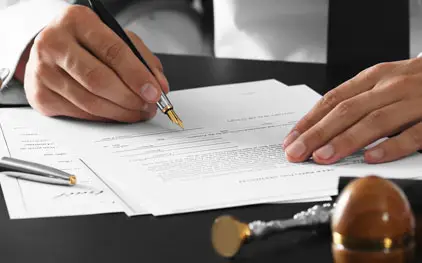


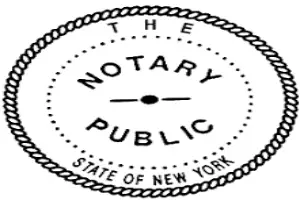 The question is periodically asked, should a